Author: Gabby Lozano

  • Why You Fall for Short-Form Misinformation

    If you have ever watched a TikTok, Instagram Reel, or short video and thought, “wait…is this actually true?”, you are not alone.

    More importantly, that moment isn’t random. It’s not just about fake news. It’s about how your brain and social media systems are working together.

    We live in a time where social media has become our one stop shop for entertainment, news and information. The notion, “it sounded right, so I didn’t question it” has become a commodity among users.

    This post is meant to help you, the chronic social media user, to understand why misinformation feels believable in the first place, especially in short-form content.


    The Short-Form Media Users

    When you hear a bit of information, have any type of question or just have some free time to fill and turn to either TikTok or Reels…then you’ve came to the right place. This post is intended for individuals who regularly use platforms like TikTok or Instagram Reels.

    If this sounds like you, you probably:

    • Scroll quickly through content
    • Rely on instinct when judging information
    • Feel confident in your ability to spot misinformation

    That is completely normal. It is also exactly why this topic matters.


    Why Short-Form Content Feels So Convincing

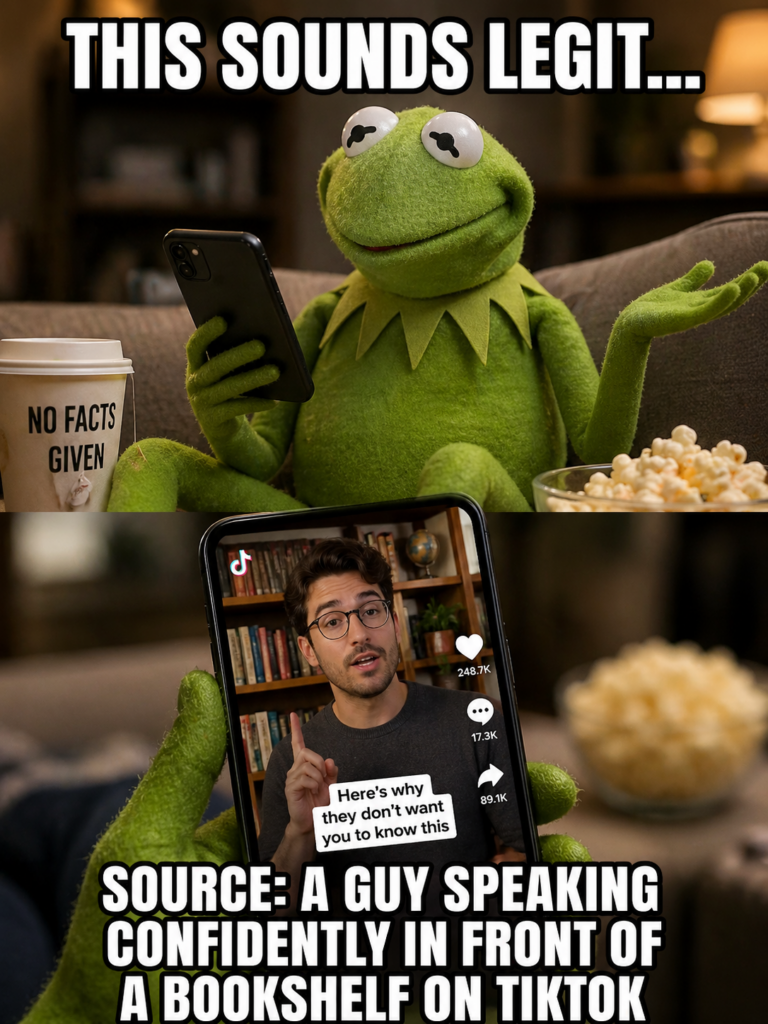
    Short-form content like Reels or TikTok are designed to be fast, engaging, and easy to understand. Information is simplified into short clips that feel clear and direct. And though you may question its validity, you’ve already grown accustomed to scrolling onward and taking it for what it says. Even further, maybe whoever just gave you that little tidbit of information was dressed nicely in front of a bookshelf. Which, yes, is also a technique used to gain an audience’s trust.
    With the innate act of consuming and moving on, the more the offense is repeated, the harder it becomes to break the habit. The issue is that the easier something is to process, the more likely we are to believe it. Just as it’s stated in an article written by Terry McLaughlin from The Union (2022), “Information repeated over and over again, whether accurate or not, can lead to building memories, and, “If you can easily retrieve something,” says Rapp, “you tend to think it’s more true.”

    Research recorded from Brown Undergraduate Journal of Public Health touch on how misinformation and social media use, shows that platforms like TikTok, make it easier for misleading content to spread because of their structure and design.

    At the same time, NPR brings light to the point that modern media environments give users more control over what they consume, but that also means we are exposed to highly curated information streams designed for our enjoyment rather than accuracy.


    It’s Not Your Fault, Your Brain Is Wired for This

    Most people don’t deeply analyze every piece of content they stumble across online. Instead, we rely on mental shortcuts, also known as heuristics, to process information quickly.

    This may have you saying things like:

    • “That sounds like it could be legit.”
    • “I think I’ve seen this before.”
    • “Oh look, everyone is sharing it!”
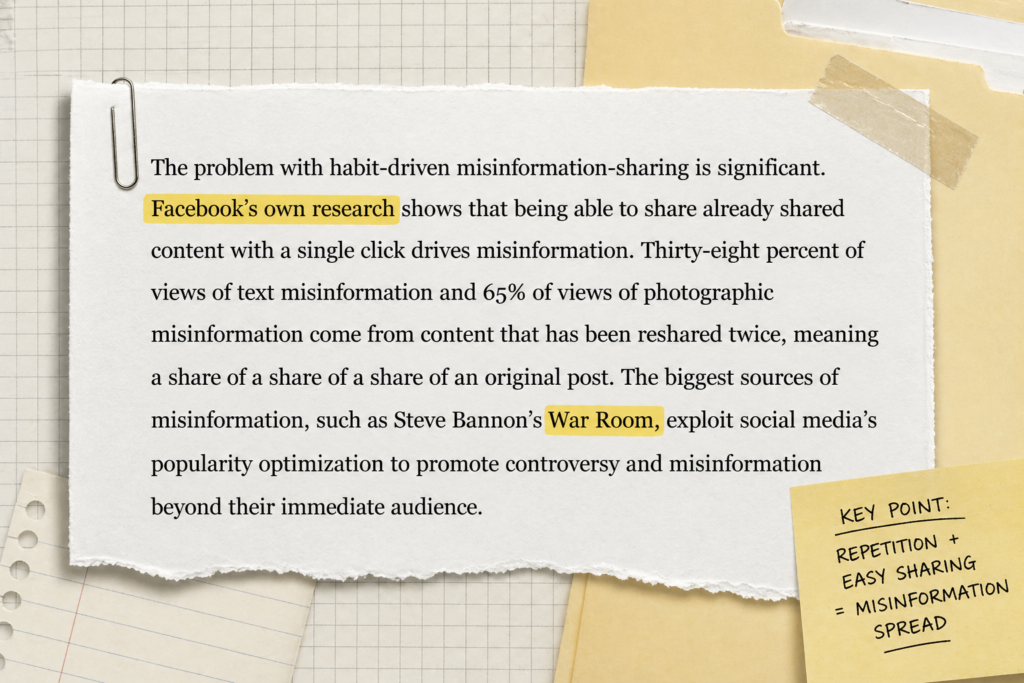
    NeimanLab. People share misinformation because of social media’s incentives — but those can be changed. By Ian AndersonGizem Ceylan and Wendy Wood Aug. 8, 2023.

    While yes, these shortcuts are efficient, they also increase our vulnerability to consumption of misinformation. I know I’ve fallen victim to this plenty of times. To expand on the Washington Post’s article “Multiple studies have found that misinformation can still influence our thinking even if we receive a correction and believe it to be true, a phenomenon known as the “continued influence effect.”, (Washington Post, 2022).

    Psychology Today shows that repetition plays a major role in belief formation. This is known as the illusory truth effect, where repeated information becomes more and more believable regardless of its accuracy.

    Additionally, studies show that our brains are more likely to accept information that feels familiar because it requires less cognitive effort to process.

    So, it really isn’t your fault. The more often you see something, the more likely you are to believe it, even if it’s false.


    How Algorithms Changed The Game

    Social media platforms don’t necessarily prioritize accuracy, they usually prioritize engagement.

    This includes:

    • Watch time
    • Likes and shares
    • Emotional reactions

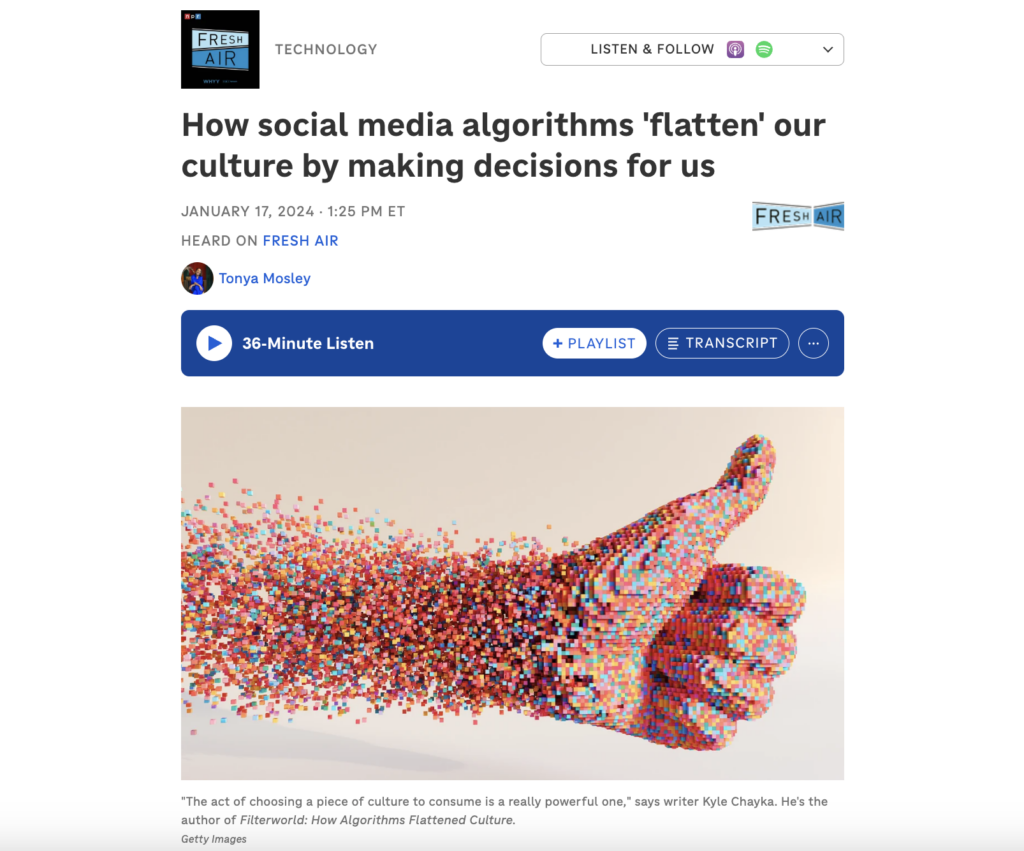
    As a result, content that is catered to your views, likes, and what you find most engaging is more likely to spread. Here is an interview with New Yorker writer, Kyle Chayka, put out by FreshAir, hosted by Tonya Mosley where they expand on the roles that algorithms play in our media world.
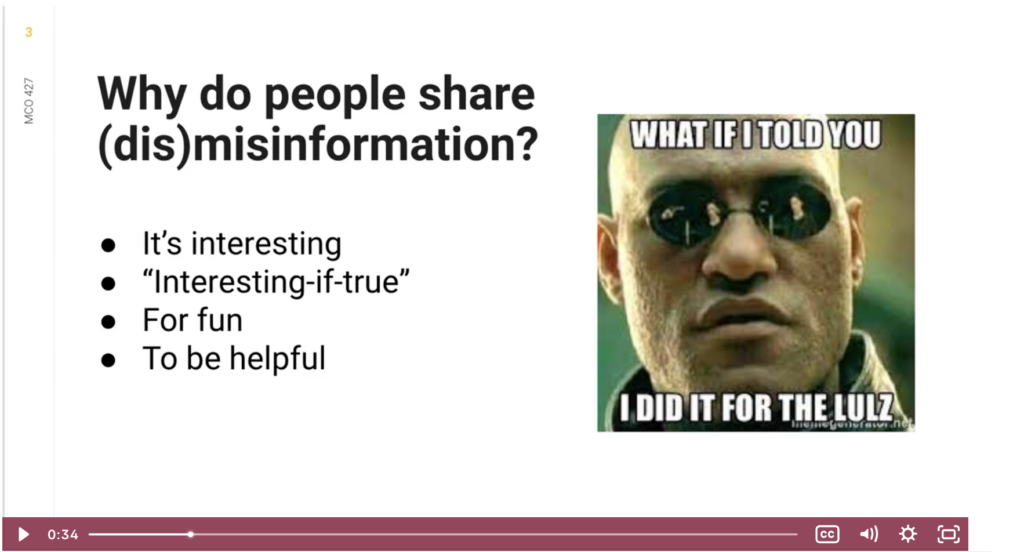
    Not only do our algorithm driven for you pages contribute to the information we spread but, in my Misinformation and Society course, we learned from one of our lecture videos by Dr. Moe Madouh, that people often share misinformation not necessarily because they believe it is true, but because it’s “interesting-if-true” or attention-grabbing.
    Digging further into just how calculated this all may be, a NeimanLab article (2023) stated, “Maintaining high levels of user engagement is crucial for the financial model of social media platforms. Attention-getting content keeps users active on the platforms.”

    This creates environments where users are repeatedly exposed to similar types of content, reinforcing their existing beliefs.


    The Moderation Trade-Off

    A lot of people assume that platforms just delete misinformation when they see it but that’s not really how it works.

    Instead of removing content right away, platforms usually start with less aggressive moderation tools, like:

    • making posts less visible
    • adding warnings or fact-check notes
    • limiting how far content spreads

    This comes down to a balancing act. Platforms are trying to minimize harm without overstepping into censorship, while also keeping their users engaged and active.

    PMC (2021) shows that even when misinformation is labeled or challenged, repeated shares keeps it relevant in feeds and repeated exposure of it can still influence what people believe. Over time, familiarity starts to feel like truth.

    The problem with this, is that, the content doesn’t actually go away. It’s still there. People can still view it, share it, and interact with it.


    Real-Life Impact

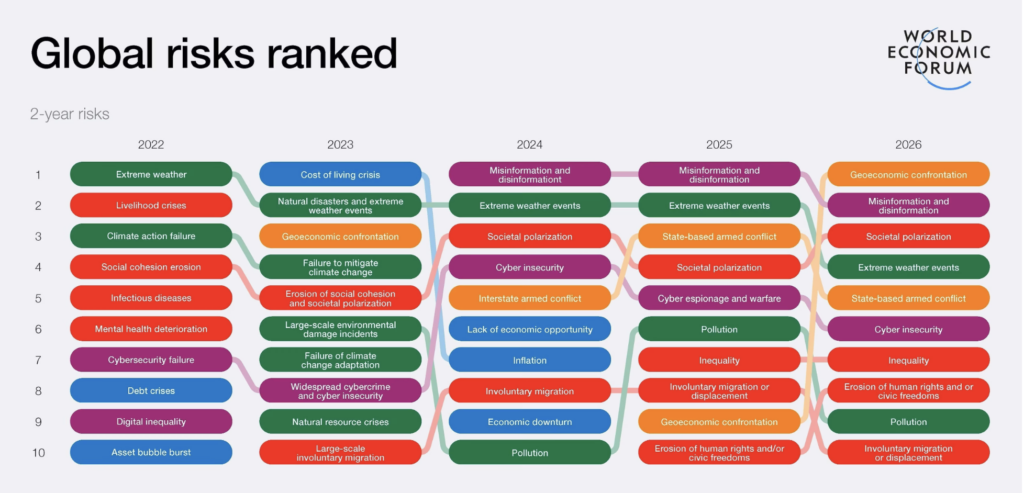
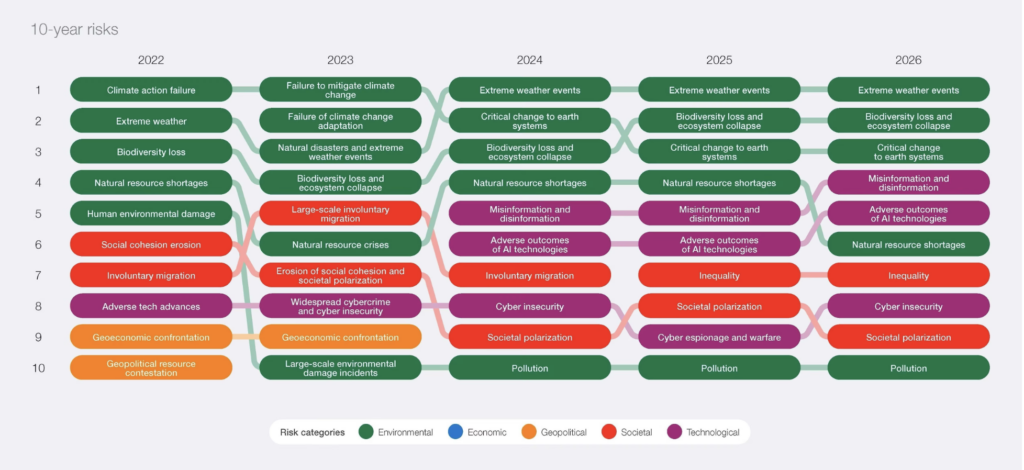
    To put this into perspective, misinformation isn’t just an online annoyance it’s now considered one of the top global risks according to World Economic Forum.
    We’ve all become so interwoven with misinformation that it’s becoming difficult to evade. I myself have even had moments where I thought, “yeaaah…that makes sense,” before actually taking the time to verify the information and sending it off to its next victim.

    I’ve also seen instances where family members of my own believe content they saw on Facebook or Reels (more specifically, AI generated cat videos my mom sends me) simply because it was shared by someone they trusted or looked believable.

    This highlights another important point.

    Misinformation doesn’t spread because people lack intelligence. It spreads because it’s designed to feel believable.


    What You Can Do

    First, you don’t need to be a professional journalist to achieve literacy and you also don’t have fact-check everything single little thing you see. However, slowing down and being slightly more intentional is a great place to start and can make such a significant difference.

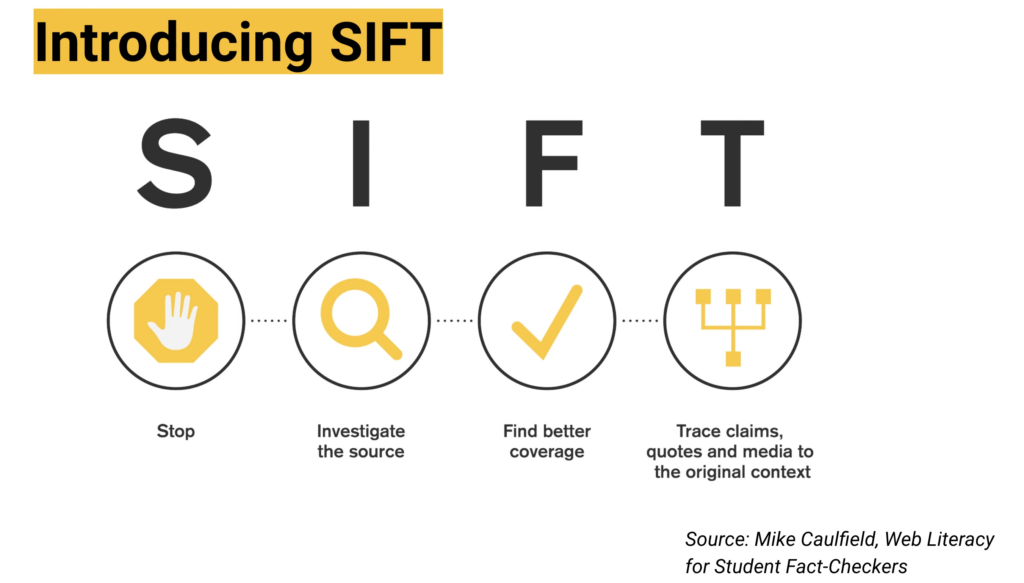
    Use the SIFT Method

    • Stop before reacting
    • Investigate the source
    • Find better coverage
    • Trace claims back to their origin

    Practice Lateral Reading

    Instead of staying on one page:

    • Open up some new tabs
    • Compare across multiple sources
    • Verify credibility (bonus points if you use Wikipedia)

    Use Credibility Tools

    There are a plenty of reputable sites you can confide in when assessing the media you’re consuming. One being NewsGuard, which provides credibility ratings for online sources and another being The Trust Project, which provides indicator tools to plug in your sources and test their validity.


    The Bigger Picture

    This isn’t about cutting out social media or completely avoiding misinformation entirely. That’s unrealistic and let’s be honest… those account de-activations only last so long before there’s a good enough reason to get back online. So instead, this is about understanding:

    • Why misinformation spreads
    • Why it feels so convincing
    • How technology and psychology influence what you see

    Once you understand these factors, you are better equipped to pause, evaluate, and make more informed decisions later on down the road.
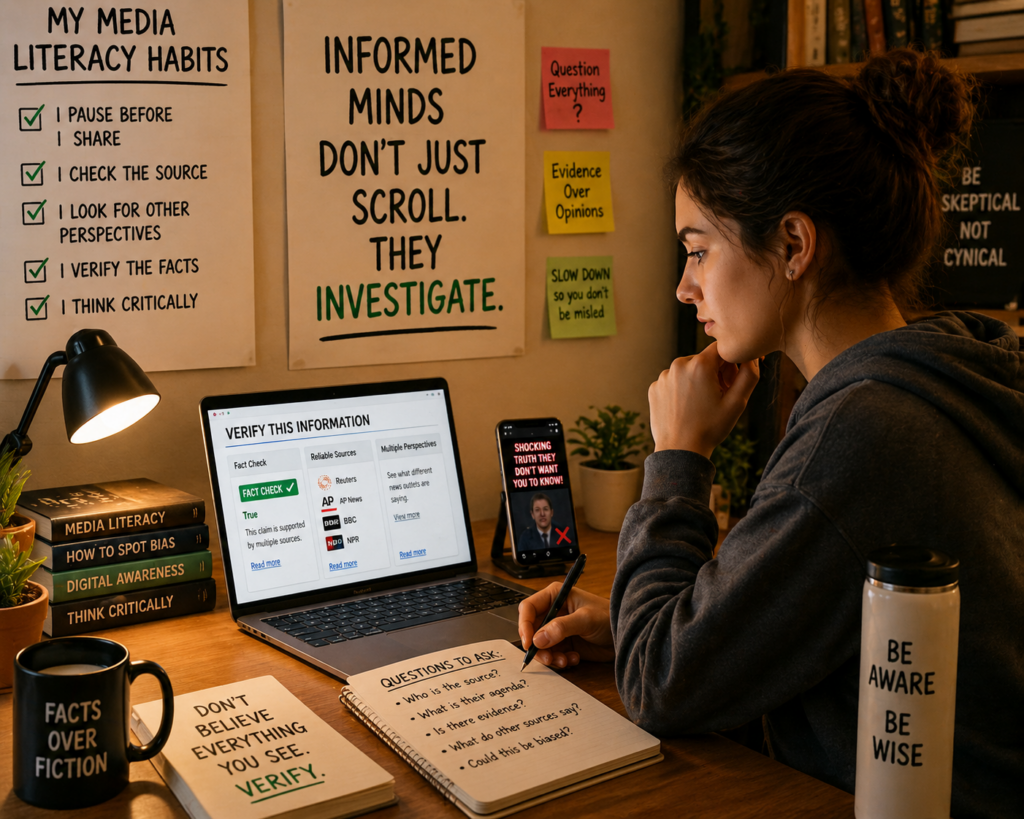

    Now It’s Up To You

    We’ve covered that misinformation spreads because it’s easy to understand, emotionally engaging, repeated frequently and amplified by algorithms.

    Contrary to popular belief, it’s not because people are careless or lazy. So, instead of asking why people believe misinformation, it’s much more powerful to ask why it feels so believable in the first place.

  • Curb Your Misinformation On Social Media

    If you spend any time on TikTok or Instagram, you’ve probably seen how fast information spreads. Sometimes before you’ve even had time to question it. That speed is what makes misinformation so difficult to control and keep from reaching the masses. At the same time, both platforms claim they are actively trying to reduce misleading content. However the real question is, are their policies actually effective, or are they just slowing things down?

    Capitol Technology University, TikTok and the War on Misinformation. November 13th, 2023.

    TikTok’s Approach On Misinformation

    Their strategy focuses on a mix of content moderation, fact-checking, and behavior-based interventions. According to TikTok’s official moderation policies, the platform aims to remove content that is harmful, and also labels or limits the reach of misleading posts instead of deleting them entirely.

    I also discovered that they work with third-party fact-checkers and have experimented with features like “footnotes”, which allow additional context to be added to videos, similar to what other platforms have tested.

    Another thing that stood out to me from my research is how much TikTok relies on behavioral science to reduce misinformation. Again, instead of just removing content, the platform tries to change how people interact with it. For example, studies show that prompting users to pause or reconsider before sharing can reduce the spread of misleading content. This approach makes sense when you think about how people are actually using TikTok. Most of the time, time’s spent scrolling quickly and reacting emotionally. Adding even a small moment of hesitation can disrupt that cycle.

    ADWEEK, TikTok: How to Turn On Screen Time Break Reminders by Brandy Shaul. July 25th, 2022.

    Though these tactics are put in place to limit the amount of misinformation consumed, it’s still a major issue, especially during global events. For example, research has shown how misinformation spreads during conflicts and crises that can shape public perception. This shows us that even with moderation systems in place, misleading content can still gain traction.


    Instagram’s Approach On Misinformation

    Instagram takes a slightly more structured approach, thanks to Meta’s broader misinformation policies that are put in place. According to Meta’s community standards, content that is false or misleading may be labeled, reduced in visibility, or removed depending on its severity.

    They also partner with independent fact-checkers where, when a post is rated false, the platform will, add a warning label, reduces distribution, or give users links to more accurate information.

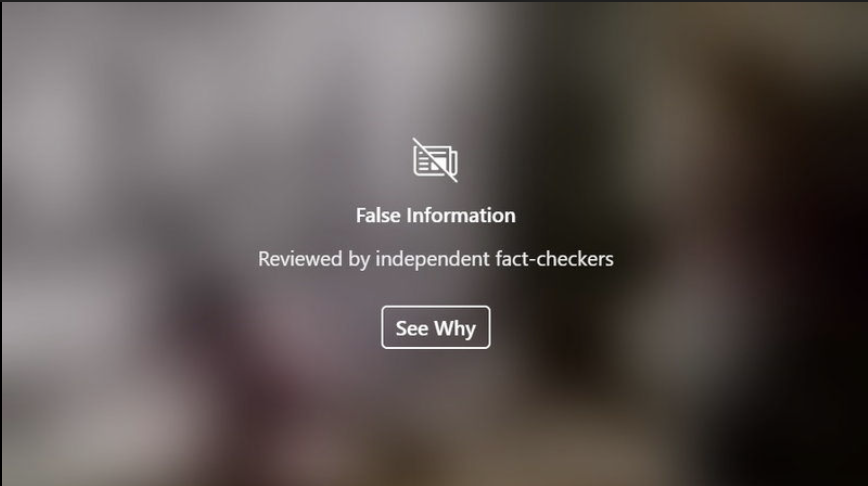
    I remember very clearly a time during COVID that both on TikTok and Instagram, if you came across certain posts, you would get a warning before viewing or sharing them if the information fell under the category of “fake news”. On Instagram specifically, the post would actually be blurred out, and you had to click through a warning screen to see it.

    Exibart Editorial Staff, Speed News. n.d.

    At the time, that felt like a big deal and made me cautious of the content I was taking in. It made it very obvious that the information might not be reliable, and it forced you to make a conscious decision before engaging with it. Instagram has continued similar efforts, including labeling posts and promoting credible sources.

    Do These Policies Actually Work?

    Both TikTok and Instagram are clearly taking action and doing something, but the effectiveness seems to be mixed.

    What works:

    1. Warning labels and blurred content slow people down
    2. Reduced visibility limits how far misinformation spreads
    3. Fact-checking adds important context

    These strategies align with what we’ve learned about misinformation in class. People often react quickly to emotional or attention-grabbing content, so adding friction, like warnings or prompts, can reduce impulsive sharing.

    Where they fall short:

    1. Timing is a major issue
      Content can go viral before it’s flagged. Once it’s already spread, moderation becomes reactive instead of preventative.
    2. Algorithms still prioritize engagement Even with moderation policies, platforms still push content that gets attention. Emotional or controversial posts, whether accurate or not, are more likely to spread. (This connects directly to research showing how misinformation thrives in fast-moving digital environments and can influence public understanding of major issues.)
    3. Not all users trust or notice warnings
      Some people ignore labels completely, while others may distrust fact-checking systems altogether.

    What’s Missing?

    One of the biggest gaps in social media is user error in education.

    Right now, platforms focus largely on labeling content and limiting reach, but they don’t do enough to explain, why something my be misleading or how users can verify information for themselves.

    Another issue could also be consistency. Not all misleading content gets flagged, which can make the system feel unreliable at times.

    How These Platforms Could Improve

    1. Teach Media Literacy in Real Time

    Platforms could include short prompts or tools that teach users how to check sources, recognize emotional manipulation, and use lateral reading.

    2. Increase Transparency

    Users should be able to understand why a post was flagged and how moderation decisions are made.

    3. Adjust Algorithm Priorities

    Platforms should reduce how much they prioritize engagement alone and instead, promote credible sources and verified information.

    4. Strengthen Consistency

    Moderation should be applied more evenly so users don’t feel like some misinformation slips through unnoticed.

    My Final Thoughts

    TikTok and Instagram are making real efforts to curb misinformation, but their strategies are mostly focused on slowing it down rather than stopping it all together.

    Because these platforms are built around mass amounts of engagement, they naturally promote content that is fast, emotional, and easier to consume, which are the same qualities that make misinformation spread in the first place.

    From my own experience, especially during COVID, I’ve seen how these policies can make a difference by forcing users to pause and think before sharing. But at the same time, I’ve also seen how and even contributed in how quickly misinformation can still spread before those systems even kick in.

    At the end of the day, platform policies help, but they’re not enough on their own. Understanding how misinformation works and learning how to respond to it is just as important as the systems designed to control it.

  • Analyzing Claims: Is the U.S. About to Reinstate the Military Draft?

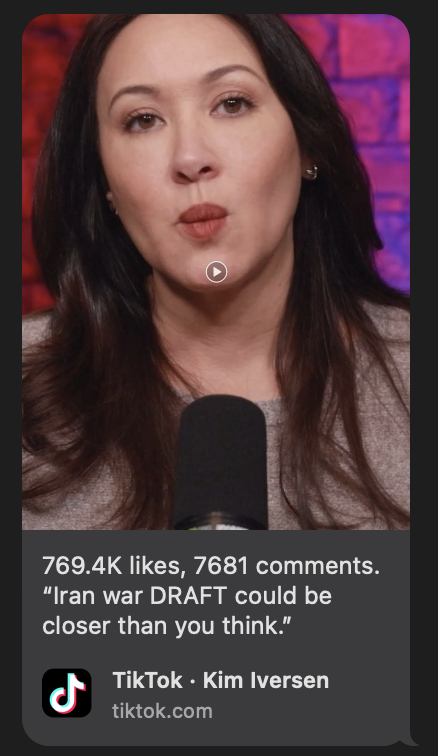
    Recently, I came across a TikTok that claimed the United States might soon initiate a military draft because of tensions involving Iran. Since I know so many people within the age group that could potentially be affected by a draft, the claim immediately caught my attention and made me uneasy. At first, I didn’t fully process what the video was saying, but after a moment it hit me and I became curious and honestly, a little concerned. Instead of immediately verifying the information, I did what many people tend to do…which is, I mentioned it to some coworkers to see if they had heard about it.

    They became just as, if not more, curious and concerned as I was. Looking back, that moment reminded me of something discussed in our course materials: people often share information not necessarily because they know it’s true, but because it seems “interesting if true.” Once a claim sounds surprising or alarming enough, it spreads quickly through conversation or social media.

    After talking with my coworkers, I sent the TikTok video to my husband, who previously served in the Navy to get his thoughts. He immediately pointed out that I probably didn’t have the full story and explained that the United States does not currently have an active military draft, even though men are still required to register with the Selective Service System. Hearing this made me realize I needed to slow down and actually verify the claim myself instead of just assuming the TikTok video was accurate.

    To investigate the claim, I used the SIFT method and lateral reading, which we just learned about in Module 4 of our course.

    Step 1: Stop

    The first step in the SIFT method is to stop before reacting or sharing the information further. The TikTok video used a dramatic tone and made the situation sound urgent, which can be a red flag when evaluating online claims. If the United States were truly about to implement a military draft, that would be a major national policy change. News like that would almost certainly be reported by multiple credible news outlets, not just a TikTok video.

    Step 2: Investigate the Source

    Next, I looked into the credibility of the sources discussing the issue. During my search I found an article explaining the rumors about a possible draft from Fox 11 Los Angeles.

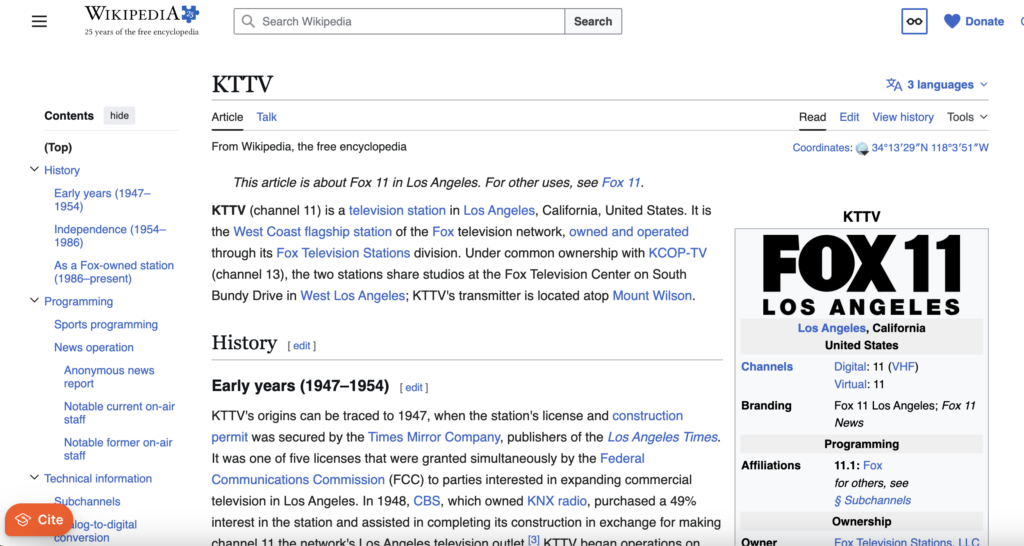
    Instead of assuming the site was credible, I used another SIFT strategy: investigating the source itself. One of the course videos suggests quickly checking a source’s background using Wikipedia. I searched for information about the television station behind the article and found a page about KTTV, the Los Angeles television station that operates Fox 11.

    The page explained that KTTV is a television station owned by Fox Television Stations and produces local news programming in the Los Angeles area. This helped me understand that the article came from a recognized local news outlet rather than an unknown website or blog.

    Step 3: Find Better Coverage

    The next step was to find better coverage by checking additional reliable sources. Instead of relying on the one article, I opened up new tabs and searched to see if other news organizations were reporting the same information.

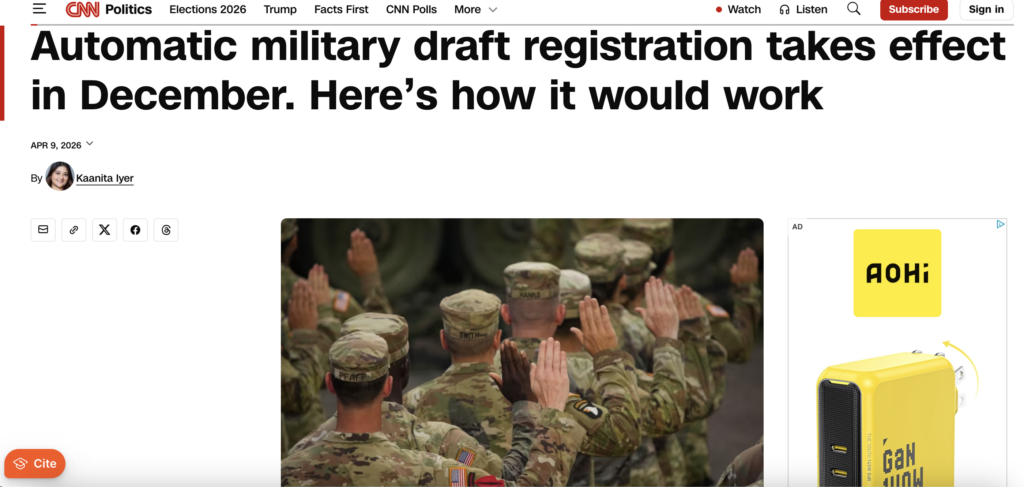
    During this step I found reporting from CNN explaining the situation surrounding the rumors about a potential draft.

    The article further explained that some policy discussions involve automatically registering eligible men with the Selective Service system, but this does not mean that the United States is implementing a military draft. Simply put, the change would just streamline the registration process that men ages 18-25 are already required to complete.

    Seeing multiple news outlets explain the same situation helped clarify that the TikTok video was likely exaggerating the issue.

    Step 4: Trace the Claim Back to the Original Context

    Finally, I tried to understand the original context behind the claim. After reading more about the Selective Service system, I learned that men in the United States have been required to register for decades. However, the country has operated with an all-volunteer military since the Vietnam War, and there has not been an active draft since 1973.

    This means the TikTok video likely took a real piece of information, Selective Service registration, and presented it in a way that made it sound like a new emergency policy being put in place.

    The SIFT tutorial videos we watched in class emphasize that tracing claims back to their original context is one of the most effective ways to identify misinformation.

    My Final Assessment

    After going through these steps, my conclusion is that the TikTok claim was misleading. The United States is not currently implementing a new military draft. Instead, the video appears to misrepresent already existing Selective Service policies in a way that created heightened fear.

    This experience actually helped me see how easily misinformation can spread, and not just online, but also through everyday conversations. I initially mentioned the claim to coworkers before verifying it myself, which could have easily created more confusion or concern about the issue among people within the age range for a possible draft.

    Using strategies like lateral reading and the SIFT method helped me slow down, investigate the claim, and find credible sources that explained the situation more clearly. This process reminded me that taking just a few minutes to verify information can prevent misinformation from spreading like wildfire and help people make more informed decisions about what they believe online.

  • Evaluating Misinformation Education Tools

    In a world where misinformation spreads like wildfire across social media and digital platforms, educational tools have become a must for teaching people how to identify misleading information. Organizations, researchers, and educators have developed interactive tools and games to help improve media literacy and critical thinking skills. For this post, I evaluated two misinformation education tools: RumorGuard, developed by the News Literacy Project, and the educational game Bad News. Both tools aim to help users better understand how misinformation works and how to recognize it online.

    RumorGuard

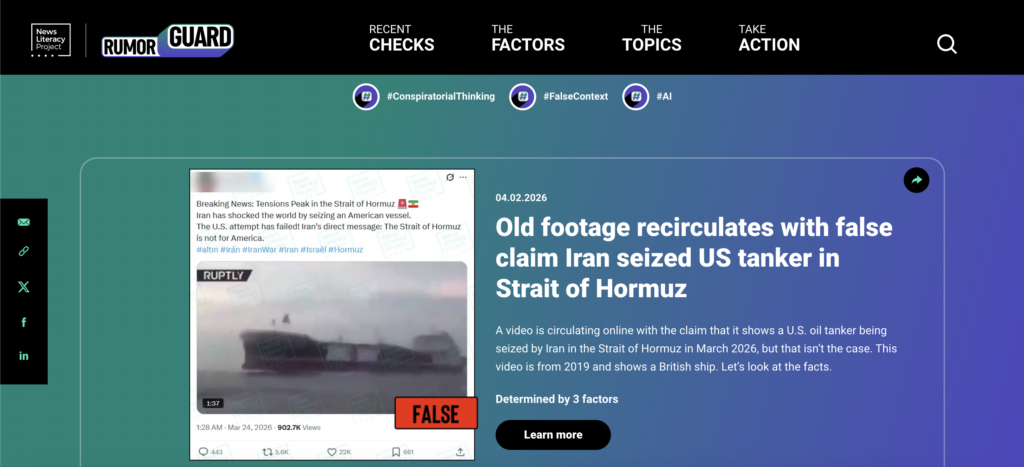
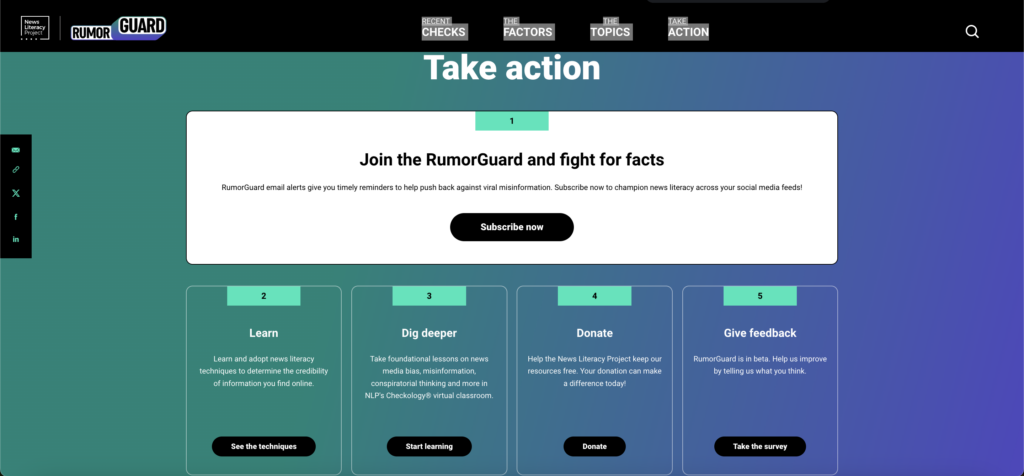
    RumorGuard is a misinformation verification tool developed by the News Literacy Project that’s intended to help users evaluate viral claims that are circulating online. The website functions as a real-time fact-checking resource, and educational platform that helps its users critically analyze the information they come across online. RumorGuard also breaks down misinformation using a structured framework that shows users how professional fact-checkers either verify or debunk viral claims.

    The site is organized into several helpful tabs that guides users through the website’s process of identifying misinformation. The “Recent Checks” section shows the most recent claims that have been investigated by the platform. These examples usually come from social media posts, viral images, or trending news stories that are spreading online. Each claim includes an explanation of whether it is accurate, misleading, or false and provides evidence that supports the conclusion.

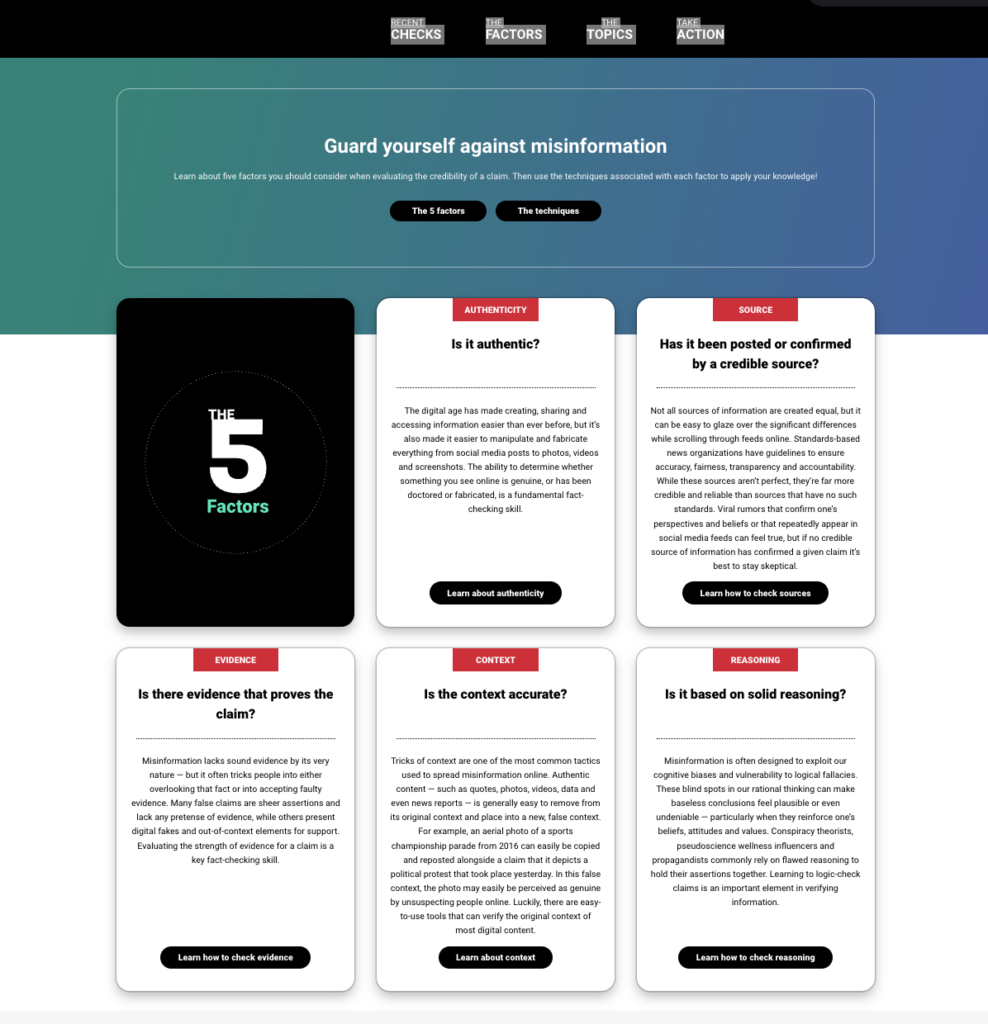
    The “Factors” tab explains the core principles RumorGuard uses to evaluate information. These factors include checking the authenticity of images or videos, verifying the source of the information, examining supporting evidence, analyzing context, and evaluating reasoning. By explaining these factors, the site teaches users what to look for when determining whether a claim is credible.

    The “Topics” section organizes misinformation examples into categories such as politics, health, science, and current events. This makes it easier for users to explore misinformation within specific subject areas and see how misleading claims appear across different types of news.

    Finally, the “Take Action” tab provides guidance on how users can respond to misinformation. It encourages users to verify claims before sharing them and offers strategies for responsibly correcting misinformation when they encounter it online.

    Bad News Game

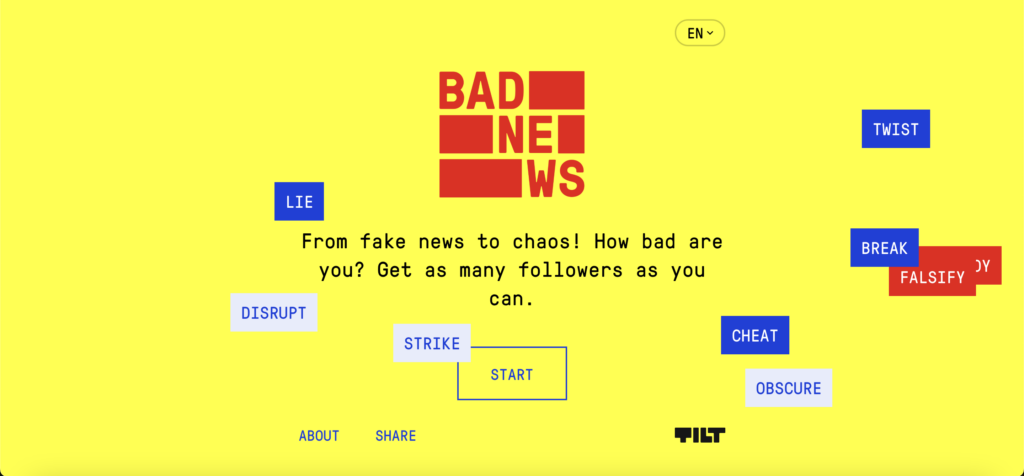
    The second tool I explored was the Bad News misinformation education game. This is an interactive experience that was designed to teach players the in and outs of how misinformation spreads online. In the game, players take on the role of someone attempting to build influence by spreading false or manipulative information across social media platforms. The game isn’t intended to encourage misinformation, but rather to demonstrate the tactics that are often used to make misleading content go viral.

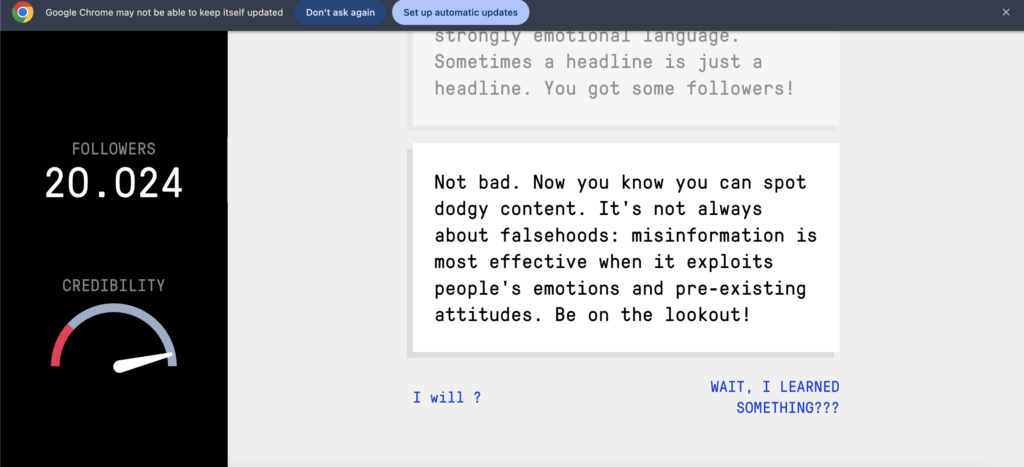
    When I first started playing the game, I was honestly hesitant about participating because I wasn’t sure of the outcomes. The idea of intentionally spreading misinformation, even in a simulation, felt uncomfortable. At the beginning, I found myself resisting some of the choices the game encouraged, such as exaggerating claims, provoking emotional reactions, or spreading conspiracy-like messages to attract followers. However, as the game progressed, I realized that the goal was not to reward dishonesty but to show how easily these tactics actually can and do gain attention online.

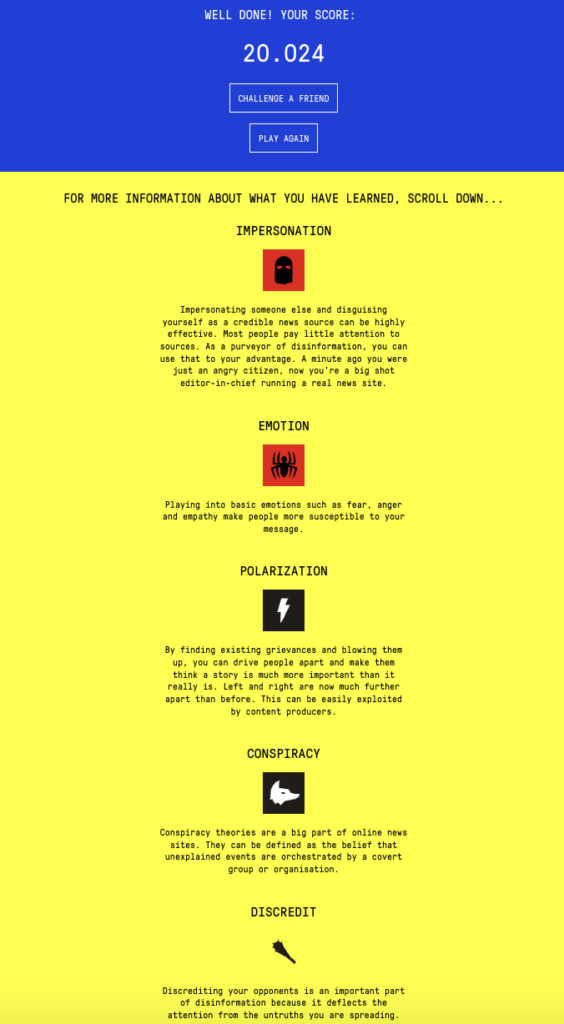
    As I continued playing, the game took strategies to the next level by suggesting impersonating authority figures, amplifying polarization, exploiting followers emotions, and using conspiratorial framing to increase engagement. Seeing these tactics presented in a game form that offered step-by-step format helped me understand how misinformation campaigns are deliberately built. It also made it even more clear why emotionally charged content often spreads faster than factual reporting on social media platforms.

    I did some of my own research on the Bad News game to see what others had to say about this strategy to strengthen media literacy and stumbled upon an article by Cambridge University. Researchers suggest “that briefly exposing people to tactics used by fake news producers can act as a “psychological vaccine” against bogus anti-science campaigns.” -University of Cambridge

    By the end of the game, I had a much better understanding of how misinformation is intentionally crafted and how it can be so persuasive. The experience made me more aware of the types of techniques, language and framing that are commonly used to manipulate audiences online.

    Reflection on Interactive Learning Tools

    Overall, both RumorGuard and the Bad News game demonstrated how interactive tools can improve media literacy education. Traditional lectures about misinformation may explain the concepts, but interactive tools really allow users to actively engage with them. Games and simulations are a great way to ensure people understand misinformation strategies in more participant and memorable ways.

    While these tools can be helpful educational resources, they can’t fully eliminate misinformation. Media literacy also depends on critical thinking skills, responsible journalism, and platform accountability. However, I still believe interactive tools like these are valuable because they encourage users to question information and take a closer look at their sources before sharing content online.

    As misinformation continues to grow, so should our knowledge on the ways we’re able to analyze and identify false claims. There are so many other interactive and helpful cites that are out there that we can use to gain this knowledge and practice spotting misinformation. So check your sources and have fun doing it!

  • 24-Hour Media Diet: Spotting Misinformation

    Media is a constant part of everyday life. From the moment I wake up to when I go to sleep, I interact with different forms of media including social media, news articles, streaming services, advertisements, and audiobooks. For this assignment, I tracked my media consumption throughout a single day and paid special attention to any content that seemed questionable, exaggerated, or potentially misleading.

    The goal of this activity was to observe my media habits and practice identifying and fact-checking information that might contain misinformation. Throughout the day, I encountered a mix of entertainment content, advertisements, news, and social media posts. Some of these examples raised questions about credibility and required some further investigation. This is my log.

    24-Hour Media Diary on March 28, 2025:

    6:00 a.m.

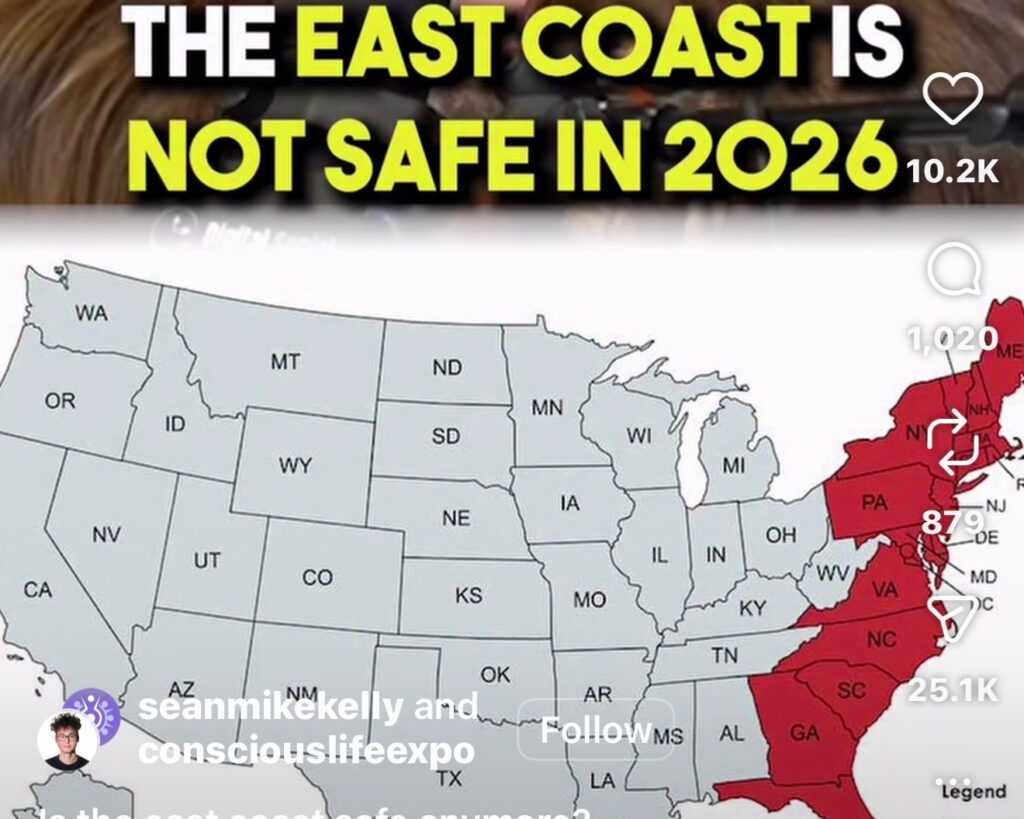
    I started my day by checking notifications on my phone while still in bed. A friend sent me an Instagram Reel as a joke because she has been trying to convince me to move back to California since I recently relocated to the East Coast. The video used dramatic language about conditions on the East Coast and felt like fear-mongering content instead of credible information.

    Screenshot

    6:45 a.m.

    Shortly afterward, I saw a post on another friend’s Instagram story that lifted my spirits and even had an article about a family hiking long-distance trails with their children linking directly to the full article, which made it easier to evaluate the credibility of the information.

    7:20 a.m.

    I took a break from scrolling through social media and instead listened to some news updates while making my bed and brushing my teeth. I opened up Spotify and listened to two short news podcasts: Unbiased Updates and CNN This Morning.

    I like to have a couple of sources to compare with, both being known, credible sources, while CNN leans a little left and Unbiased Updates being more centralized.

    8:35 a.m.

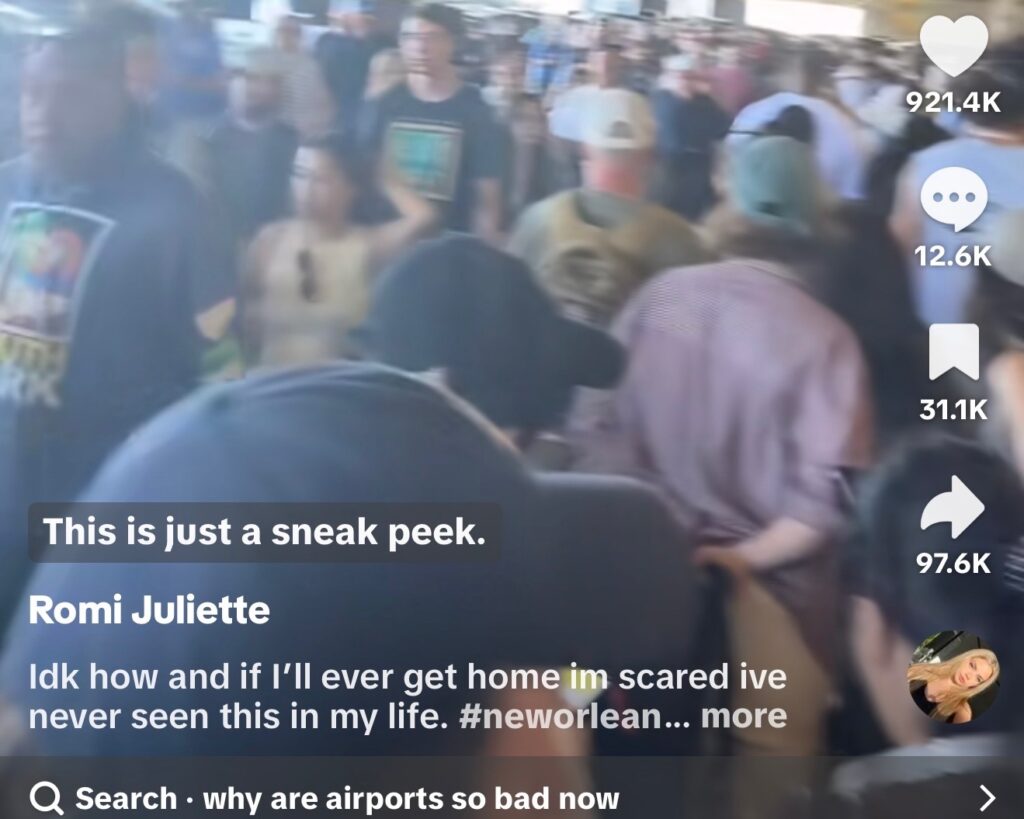
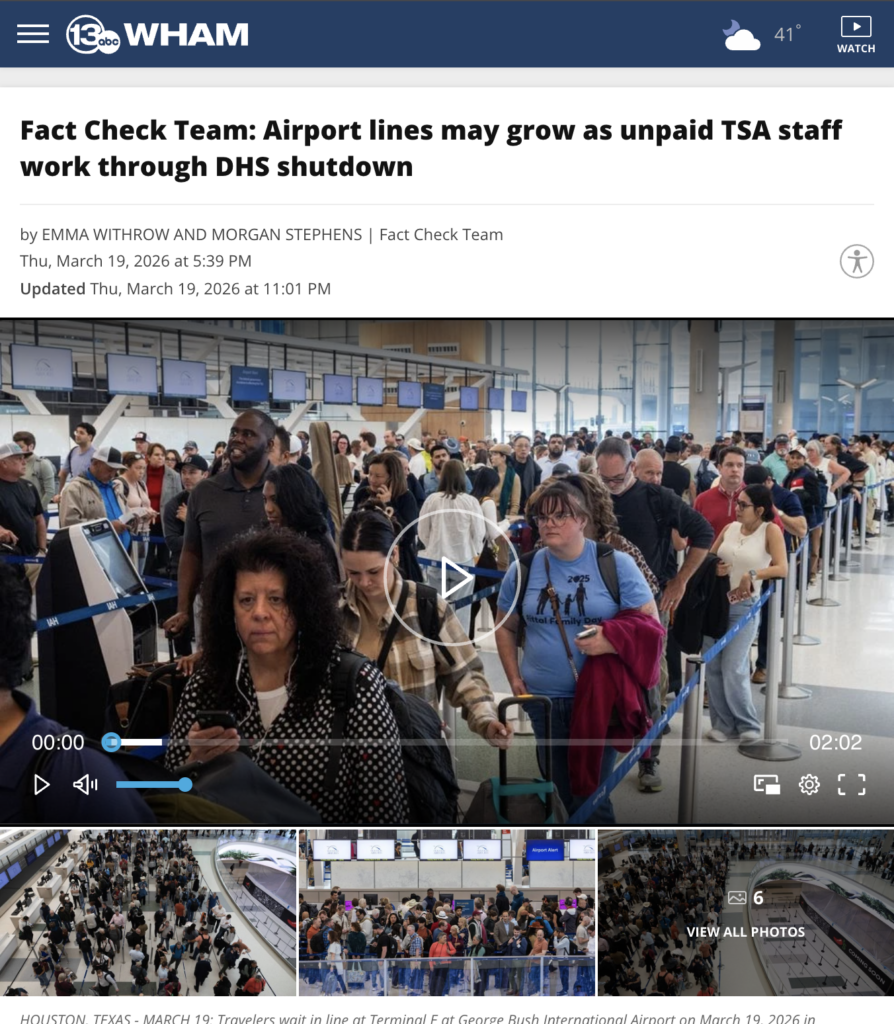
    Later in the morning, I opened TikTok because I was looking for ideas for coffee shops to visit and instead, the first video I saw discussed potential airport disruptions and suggested that TSA shutdowns could affect travelers which was also brought up in my news updates. Since I have an upcoming trip scheduled, this video made me nervous and raised more questions about whether the claim was accurate.

    Screenshot

    4:00 p.m.

    After work, my husband and I turned on the TV and saw an advertisement for a new episode of Hot Ones featuring Hilary Duff promoting her new album. It was clearly promotional media rather than news or informational content but, it was just for background while we worked on homework, and it still demonstrates how media consumption includes advertising and entertainment.

    6:30 p.m.

    While cooking dinner, I opened up my Audible app to listen to my audiobook. This jolted my memory and I recalled seeing discussion online about whether Sarah J. Maas was releasing new books in the A Court of Thorns and Roses series. So I searched TikTok and found a video claiming potential new release dates.

    9:20 p.m.

    Before going to bed, I opened Instagram again and saw an advertisement for a dog supplement brand called Dog is Human. The ad suggested that the supplements could significantly improve a dog’s health. Because advertisements so often make strong health claims, I wanted to verify whether these supplements were actually safe and beneficial for our pets.

    The Content in Questioning

    Several examples from my media diary required verification. The TikTok video discussing airport disruptions initially created concern because it suggested that TSA shutdowns might cause major travel problems. However, after reviewing more detailed reporting from news organizations, I learned that while staffing issues can affect airport wait times, the situation is often more complex than a short social media video suggests.

    Similarly, the TikTok video discussing new books by Sarah J. Maas illustrates how social media can spread rumors or speculation. Checking the author’s official website helped confirm which information was accurate and which claims were simply fan speculation (and I am beyond thrilled this proved true!).

    The advertisement for dog supplements also raised credibility concerns. Advertisements often emphasize benefits without clearly explaining potential risks. By consulting information from veterinary organizations and product reviews, I was able to get different perspectives leaving me still in question and also more insightful to marketing ploys.

    The play on emotions geared towards pet owners clouds me on this product.

    These examples demonstrate how misinformation doesn’t always come in the form of completely false statements. Sometimes, it can appear as exaggerated claims, incomplete information, biases, or content just flat-out lacking credible sources.

    Reflection

    Tracking my media consumption for 24 hours helped me realize, not only how often I get sidetracked, (a lot..oops), but also how frequently I encounter potentially misleading information online. There were so many questionable examples that appeared on my social media apps like TikTok and Instagram. These are the unexpected suspects because they’re perceived as outlets of entertainment and the short videos and advertisements often simplify complex topics.

    Another pattern I noticed is that emotionally charged or alarming content tends to capture attention a lot quickly. For example, the TikTok video I watched about airport disruptions flared up anxiety about travel before I even had the chance to verify the information for myself. This demonstrates how easily misinformation or exaggerated claims can influence perceptions.

    This activity also reminded me of the importance of checking multiple sources before accepting a claim as matter of fact. By looking at official websites, credible news sources, and expert organizations, it becomes much easier to evaluate whether information is trustworthy, credible, or valid.

    Overall, completing this media diary helped me become more aware of how I interact with media on a day-to-day basis. It also reinforced the importance of media literacy and fact-checking in today’s digital age.