In a world where misinformation spreads like wildfire across social media and digital platforms, educational tools have become a must for teaching people how to identify misleading information. Organizations, researchers, and educators have developed interactive tools and games to help improve media literacy and critical thinking skills. For this post, I evaluated two misinformation education tools: RumorGuard, developed by the News Literacy Project, and the educational game Bad News. Both tools aim to help users better understand how misinformation works and how to recognize it online.
RumorGuard
RumorGuard is a misinformation verification tool developed by the News Literacy Project that’s intended to help users evaluate viral claims that are circulating online. The website functions as a real-time fact-checking resource, and educational platform that helps its users critically analyze the information they come across online. RumorGuard also breaks down misinformation using a structured framework that shows users how professional fact-checkers either verify or debunk viral claims.
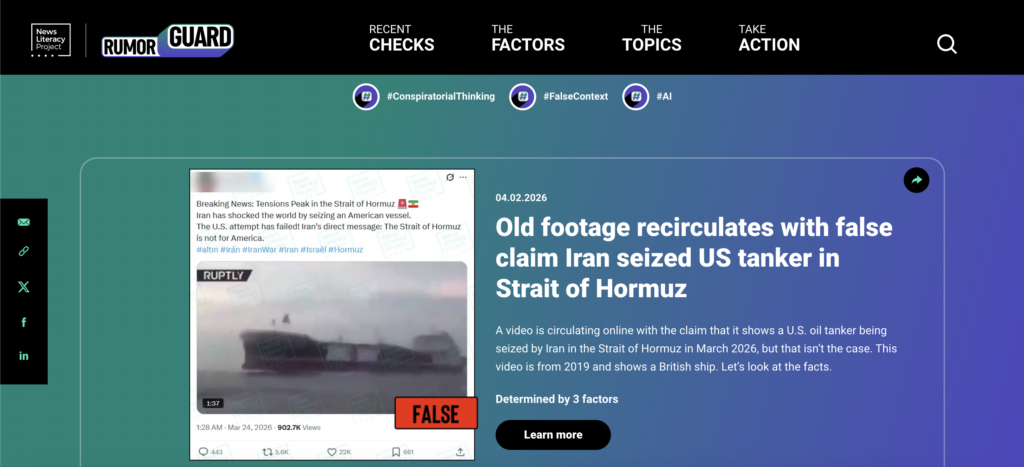
The site is organized into several helpful tabs that guides users through the website’s process of identifying misinformation. The “Recent Checks” section shows the most recent claims that have been investigated by the platform. These examples usually come from social media posts, viral images, or trending news stories that are spreading online. Each claim includes an explanation of whether it is accurate, misleading, or false and provides evidence that supports the conclusion.
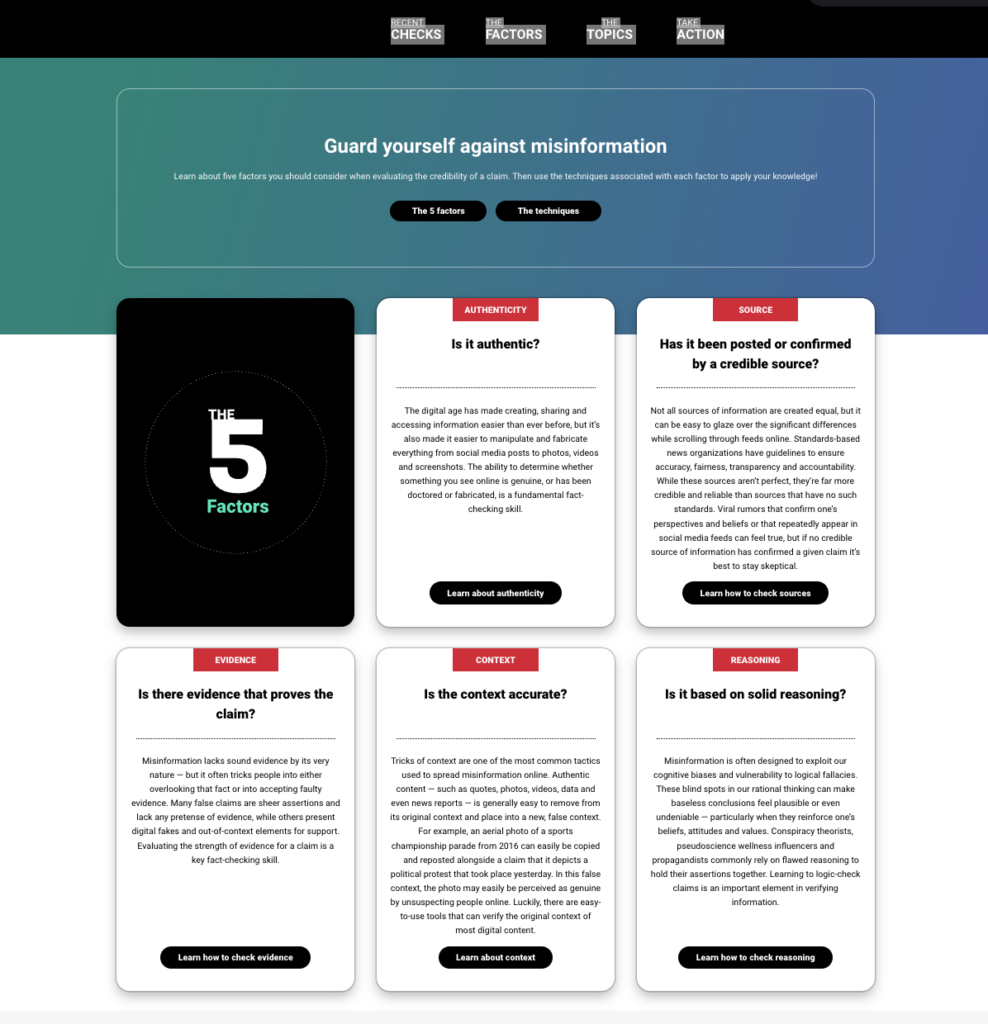
The “Factors” tab explains the core principles RumorGuard uses to evaluate information. These factors include checking the authenticity of images or videos, verifying the source of the information, examining supporting evidence, analyzing context, and evaluating reasoning. By explaining these factors, the site teaches users what to look for when determining whether a claim is credible.
The “Topics” section organizes misinformation examples into categories such as politics, health, science, and current events. This makes it easier for users to explore misinformation within specific subject areas and see how misleading claims appear across different types of news.
Finally, the “Take Action” tab provides guidance on how users can respond to misinformation. It encourages users to verify claims before sharing them and offers strategies for responsibly correcting misinformation when they encounter it online.
Bad News Game
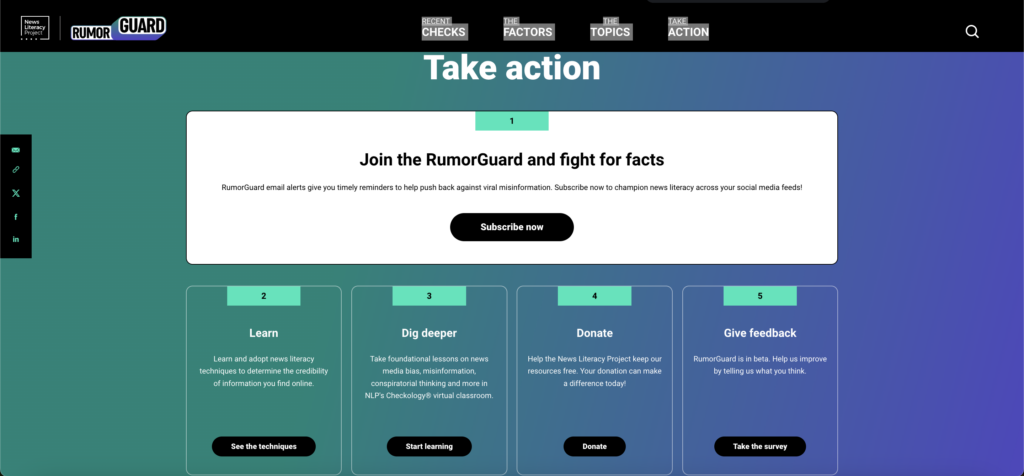
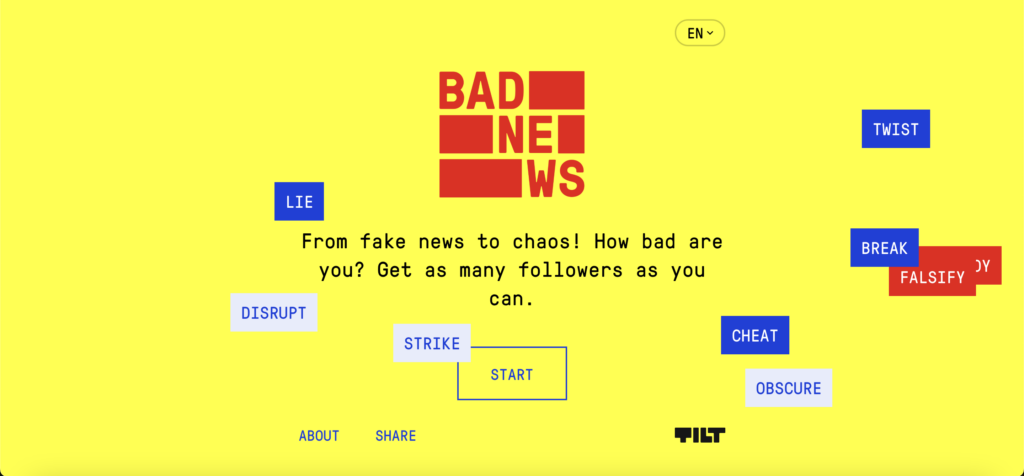
The second tool I explored was the Bad News misinformation education game. This is an interactive experience that was designed to teach players the in and outs of how misinformation spreads online. In the game, players take on the role of someone attempting to build influence by spreading false or manipulative information across social media platforms. The game isn’t intended to encourage misinformation, but rather to demonstrate the tactics that are often used to make misleading content go viral.
When I first started playing the game, I was honestly hesitant about participating because I wasn’t sure of the outcomes. The idea of intentionally spreading misinformation, even in a simulation, felt uncomfortable. At the beginning, I found myself resisting some of the choices the game encouraged, such as exaggerating claims, provoking emotional reactions, or spreading conspiracy-like messages to attract followers. However, as the game progressed, I realized that the goal was not to reward dishonesty but to show how easily these tactics actually can and do gain attention online.
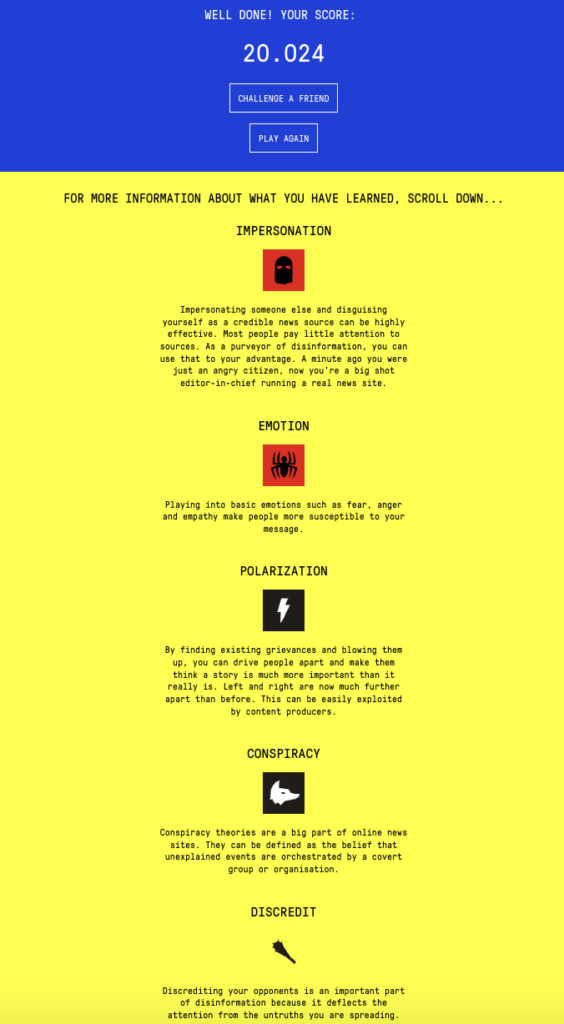
As I continued playing, the game took strategies to the next level by suggesting impersonating authority figures, amplifying polarization, exploiting followers emotions, and using conspiratorial framing to increase engagement. Seeing these tactics presented in a game form that offered step-by-step format helped me understand how misinformation campaigns are deliberately built. It also made it even more clear why emotionally charged content often spreads faster than factual reporting on social media platforms.
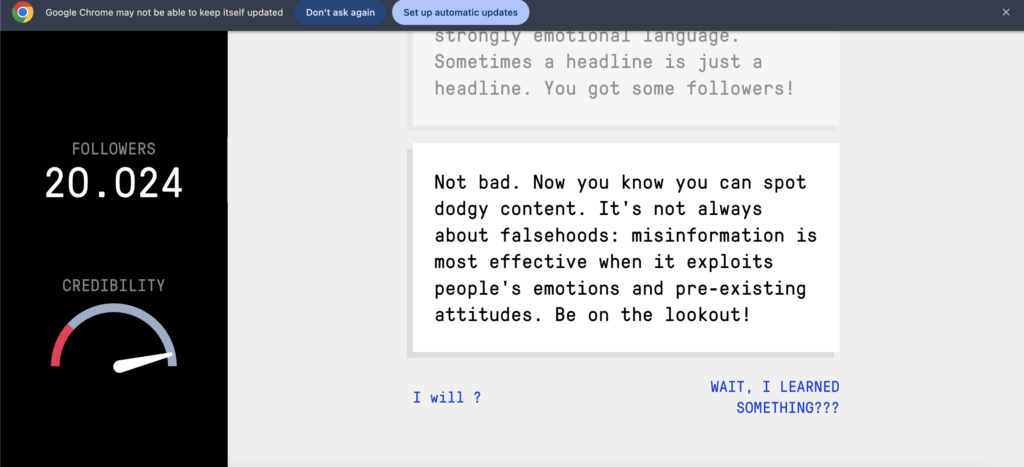
I did some of my own research on the Bad News game to see what others had to say about this strategy to strengthen media literacy and stumbled upon an article by Cambridge University. Researchers suggest “that briefly exposing people to tactics used by fake news producers can act as a “psychological vaccine” against bogus anti-science campaigns.” -University of Cambridge
By the end of the game, I had a much better understanding of how misinformation is intentionally crafted and how it can be so persuasive. The experience made me more aware of the types of techniques, language and framing that are commonly used to manipulate audiences online.
Reflection on Interactive Learning Tools
Overall, both RumorGuard and the Bad News game demonstrated how interactive tools can improve media literacy education. Traditional lectures about misinformation may explain the concepts, but interactive tools really allow users to actively engage with them. Games and simulations are a great way to ensure people understand misinformation strategies in more participant and memorable ways.
While these tools can be helpful educational resources, they can’t fully eliminate misinformation. Media literacy also depends on critical thinking skills, responsible journalism, and platform accountability. However, I still believe interactive tools like these are valuable because they encourage users to question information and take a closer look at their sources before sharing content online.
As misinformation continues to grow, so should our knowledge on the ways we’re able to analyze and identify false claims. There are so many other interactive and helpful cites that are out there that we can use to gain this knowledge and practice spotting misinformation. So check your sources and have fun doing it!