If you spend any time on TikTok or Instagram, you’ve probably seen how fast information spreads. Sometimes before you’ve even had time to question it. That speed is what makes misinformation so difficult to control and keep from reaching the masses. At the same time, both platforms claim they are actively trying to reduce misleading content. However the real question is, are their policies actually effective, or are they just slowing things down?
TikTok’s Approach On Misinformation
Their strategy focuses on a mix of content moderation, fact-checking, and behavior-based interventions. According to TikTok’s official moderation policies, the platform aims to remove content that is harmful, and also labels or limits the reach of misleading posts instead of deleting them entirely.
I also discovered that they work with third-party fact-checkers and have experimented with features like “footnotes”, which allow additional context to be added to videos, similar to what other platforms have tested.
Another thing that stood out to me from my research is how much TikTok relies on behavioral science to reduce misinformation. Again, instead of just removing content, the platform tries to change how people interact with it. For example, studies show that prompting users to pause or reconsider before sharing can reduce the spread of misleading content. This approach makes sense when you think about how people are actually using TikTok. Most of the time, time’s spent scrolling quickly and reacting emotionally. Adding even a small moment of hesitation can disrupt that cycle.

Though these tactics are put in place to limit the amount of misinformation consumed, it’s still a major issue, especially during global events. For example, research has shown how misinformation spreads during conflicts and crises that can shape public perception. This shows us that even with moderation systems in place, misleading content can still gain traction.
Instagram’s Approach On Misinformation
Instagram takes a slightly more structured approach, thanks to Meta’s broader misinformation policies that are put in place. According to Meta’s community standards, content that is false or misleading may be labeled, reduced in visibility, or removed depending on its severity.
They also partner with independent fact-checkers where, when a post is rated false, the platform will, add a warning label, reduces distribution, or give users links to more accurate information.
I remember very clearly a time during COVID that both on TikTok and Instagram, if you came across certain posts, you would get a warning before viewing or sharing them if the information fell under the category of “fake news”. On Instagram specifically, the post would actually be blurred out, and you had to click through a warning screen to see it.
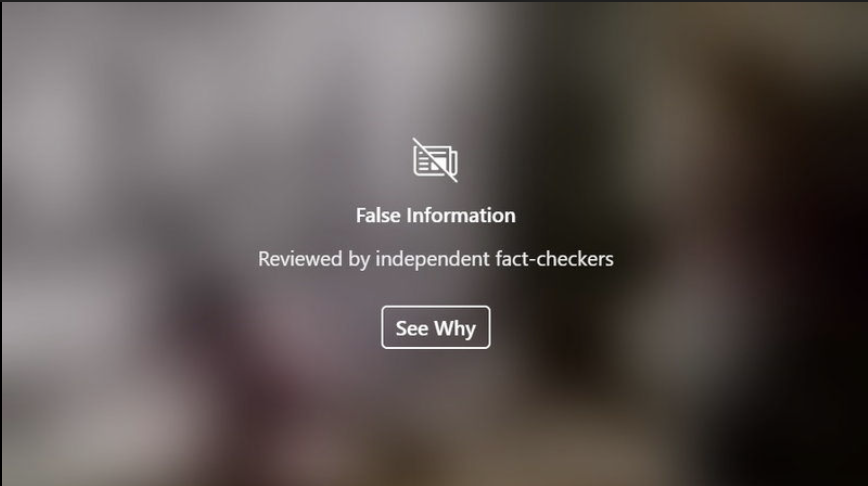
At the time, that felt like a big deal and made me cautious of the content I was taking in. It made it very obvious that the information might not be reliable, and it forced you to make a conscious decision before engaging with it. Instagram has continued similar efforts, including labeling posts and promoting credible sources.
Do These Policies Actually Work?
Both TikTok and Instagram are clearly taking action and doing something, but the effectiveness seems to be mixed.
What works:
- Warning labels and blurred content slow people down
- Reduced visibility limits how far misinformation spreads
- Fact-checking adds important context
These strategies align with what we’ve learned about misinformation in class. People often react quickly to emotional or attention-grabbing content, so adding friction, like warnings or prompts, can reduce impulsive sharing.
Where they fall short:
- Timing is a major issue
Content can go viral before it’s flagged. Once it’s already spread, moderation becomes reactive instead of preventative. - Algorithms still prioritize engagement Even with moderation policies, platforms still push content that gets attention. Emotional or controversial posts, whether accurate or not, are more likely to spread. (This connects directly to research showing how misinformation thrives in fast-moving digital environments and can influence public understanding of major issues.)
- Not all users trust or notice warnings
Some people ignore labels completely, while others may distrust fact-checking systems altogether.
What’s Missing?
One of the biggest gaps in social media is user error in education.
Right now, platforms focus largely on labeling content and limiting reach, but they don’t do enough to explain, why something my be misleading or how users can verify information for themselves.
Another issue could also be consistency. Not all misleading content gets flagged, which can make the system feel unreliable at times.
How These Platforms Could Improve
1. Teach Media Literacy in Real Time
Platforms could include short prompts or tools that teach users how to check sources, recognize emotional manipulation, and use lateral reading.
2. Increase Transparency
Users should be able to understand why a post was flagged and how moderation decisions are made.
3. Adjust Algorithm Priorities
Platforms should reduce how much they prioritize engagement alone and instead, promote credible sources and verified information.
4. Strengthen Consistency
Moderation should be applied more evenly so users don’t feel like some misinformation slips through unnoticed.
My Final Thoughts
TikTok and Instagram are making real efforts to curb misinformation, but their strategies are mostly focused on slowing it down rather than stopping it all together.
Because these platforms are built around mass amounts of engagement, they naturally promote content that is fast, emotional, and easier to consume, which are the same qualities that make misinformation spread in the first place.
From my own experience, especially during COVID, I’ve seen how these policies can make a difference by forcing users to pause and think before sharing. But at the same time, I’ve also seen how and even contributed in how quickly misinformation can still spread before those systems even kick in.
At the end of the day, platform policies help, but they’re not enough on their own. Understanding how misinformation works and learning how to respond to it is just as important as the systems designed to control it.